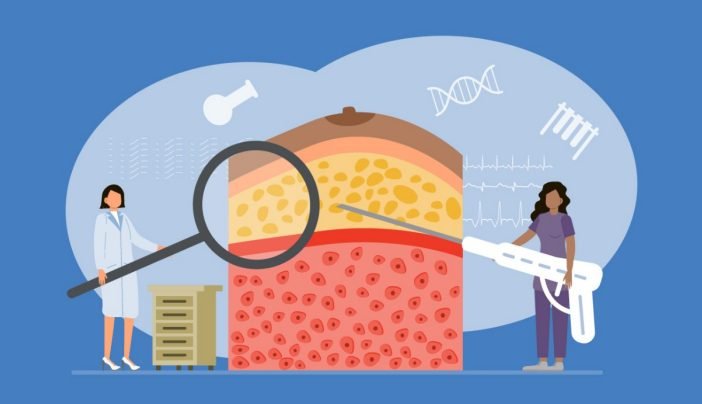
A breast biopsy is a procedure in which a small sample of tissue or fluid is removed from an area of concern in the breast and examined under a microscope. While mammograms and ultrasounds can detect suspicious areas, a biopsy is the only definitive way to diagnose or rule out breast cancer. A pathologist evaluates the cells to determine whether they are benign or malignant, and if cancer is present, identifies characteristics that guide treatment. Reassuringly, only about 20% of breast biopsies show cancer. At Advanced Breast Care Consultants, we perform biopsies with care, precision, and clear communication at every step.
Types of Breast Biopsy
The type of biopsy we recommend depends on how the area appears on imaging, its size and location, and how many areas need sampling. The three main approaches are:
- Fine-needle aspiration
- Core-needle biopsy
- Surgical biopsy
Accurate Diagnosis
The only definitive way to confirm or rule out breast cancer.
Minimally Invasive
Most biopsies use a needle with local anesthesia and little to no scarring.
Image-Guided Precision
Ultrasound or mammogram guidance ensures the sample is taken from the exact area.
Why Choose Us for Your Breast Biopsy?
Our team performs breast biopsies using the least invasive method appropriate for your situation, guided by advanced imaging for accuracy. We use local anesthesia for comfort, explain each step clearly, and support you through the results. Most biopsies require little downtime, with normal activities resumed within a day.
Most popular and trending Questions?
As part of our commitment to advancing neurological science, we actively engage in cutting-edge research initiatives. By pushing the boundaries of knowledge, we aim to bring about breakthroughs that will shape the future
A breast biopsy is recommended when imaging or a physical exam reveals a suspicious area. This may include a new lump, an abnormal mammogram or ultrasound finding, microcalcifications, architectural distortion, or any change that cannot be clearly identified through imaging alone.
Core-needle biopsy and surgical biopsy provide the most accurate results because they collect larger tissue samples. Fine-needle aspiration can be helpful for cysts but may miss cancer if the needle does not capture the exact area of abnormal cells.
Most breast biopsies are not painful. Local anesthesia is used to numb the breast, so you may feel pressure but not sharp pain. Mild soreness afterward is normal and usually resolves quickly.
Preparation is simple. Wear comfortable clothing, avoid applying lotions or powders to the breast area, and bring a list of medications. Your doctor will give specific instructions if any adjustments are needed.
Yes. Imaging guidance is often used to ensure accuracy. Ultrasound is commonly used for lumps visible on ultrasound, while stereotactic (mammogram-guided) biopsy is used for areas visible only on mammography.
Some patients may need to pause blood thinners before the procedure, but this depends on your medical history. Your doctor will review your medications and tell you whether any changes are necessary.
You may experience mild soreness, bruising, or swelling. A small bandage will be placed over the biopsy site, and you’ll receive instructions on how to care for the area. Most patients resume normal activities the same day or the next.
Most people can return to normal activities within 24 hours. Your doctor may recommend avoiding strenuous exercise or heavy lifting for a short period.
Some bruising or swelling is common and typically mild. It usually resolves within a few days. Ice packs and over-the-counter pain relief can help with discomfort.
Biopsy results typically take 1–2 weeks, depending on the complexity of the analysis. Your doctor will review the pathology report with you once it is available.
A benign result means no cancer was found. The abnormality may be due to cysts, fibroadenomas, scar tissue, or other noncancerous changes. Your doctor will explain whether any follow-up imaging is needed.
If cancer is detected, your doctor will discuss the type of cancer, its characteristics, and the next steps. This may include additional imaging, meeting with a breast surgeon, or discussing treatment options such as surgery, radiation, or medication.
No. Breast biopsies do not cause cancer to spread. They are safe, standard procedures used worldwide to diagnose breast abnormalities.
A needle biopsy uses a fine or core needle to remove tissue samples and is minimally invasive with little to no scarring. A surgical biopsy involves making a small incision to remove all or part of the lump and is used when a needle biopsy isn’t sufficient — it typically requires stitches and leaves a small scar.